A night in Nairobi, five nights on Suyian Conservancy, and a last slow morning before the flight home. Each day has a shape to it, and none of it is compulsory. Click on a day to open it.
The people named here are those the week is built around. Each will be confirmed nearer the time, and one or two may change.
Stand-in · for: Hemingways, Nairobi
Sunday 9 May · Arrival
Arrival
You land in Nairobi and our team is waiting at the aircraft door. They walk you through immigration and baggage so there is no queueing, and a car takes you the short distance to Hemingways in Karen, where your room is ready whatever time you arrive. If your flight gets you in early enough, there is dinner. Otherwise, sleep. Tomorrow is when it begins.
If you’d like to come early or stay on, tell us and we’ll arrange it.
Monday 10 May · North to Suyian
North to Suyian
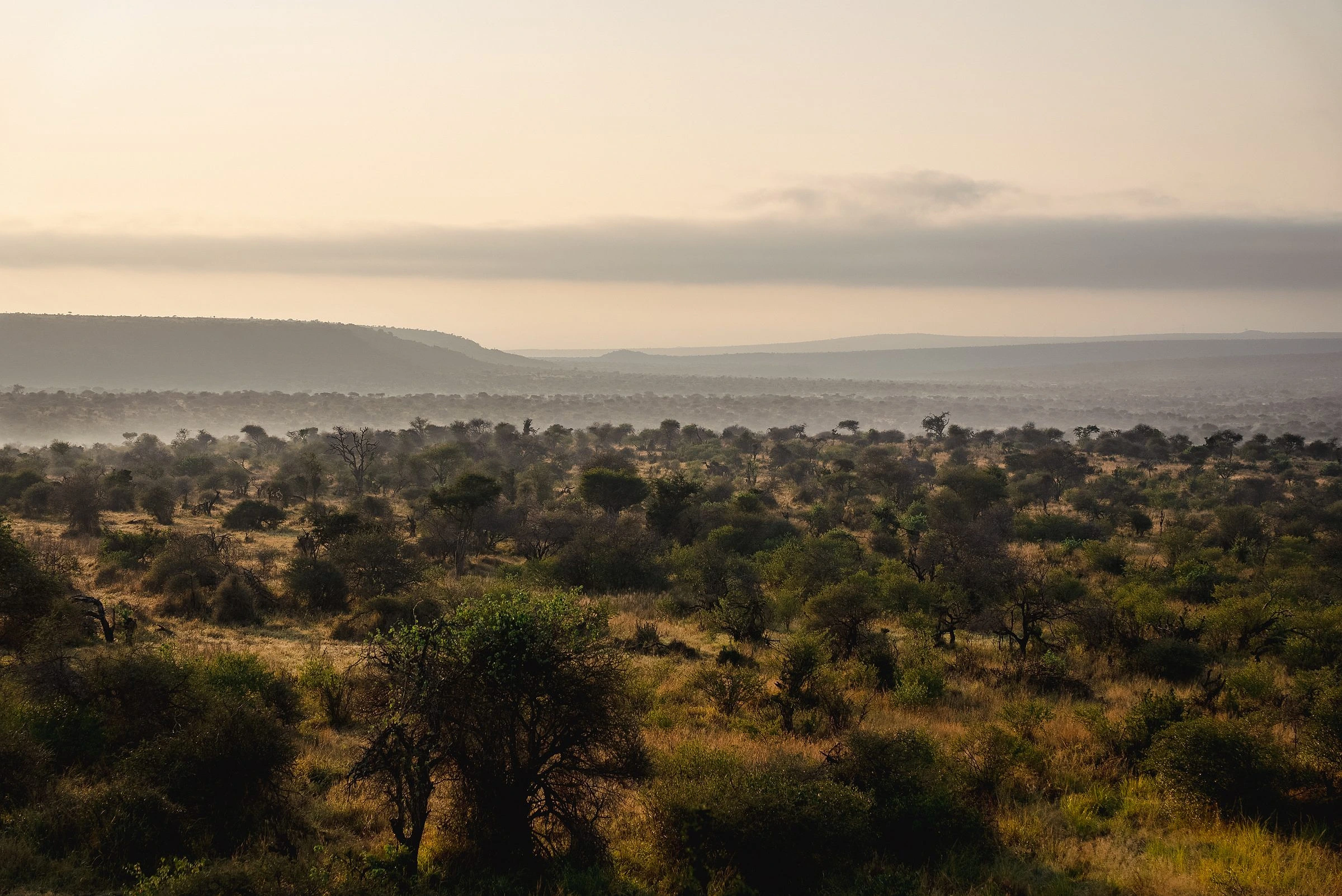
A car collects you at nine for Wilson, the small airport on the edge of Nairobi, where your charter is waiting. An hour or so later you cross the edge of the Laikipia plateau and come down onto the conservancy’s airstrip. There is no terminal, just your guide, a flask of tea and coffee, something cold, and a few minutes to stand in the open air before the drive up to the lodge.
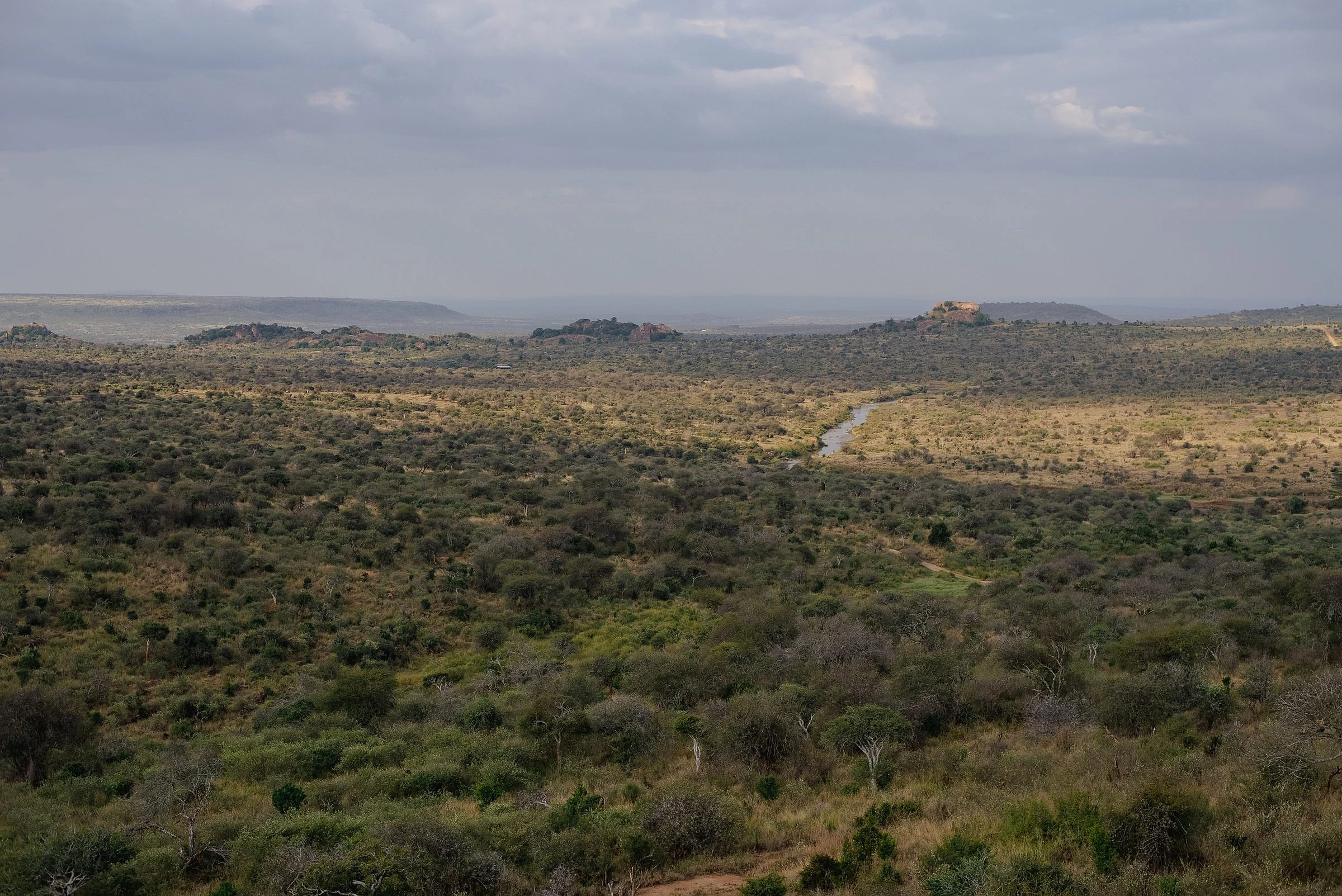
Lunch is on the terrace with Liza and Max, looking out over the kopjes and the Ewaso Narok. We keep the afternoon easy: the spa, the pool, a sleep. If you have the energy, there is a late drive down through the kopjes and along the river, which is black leopard country.
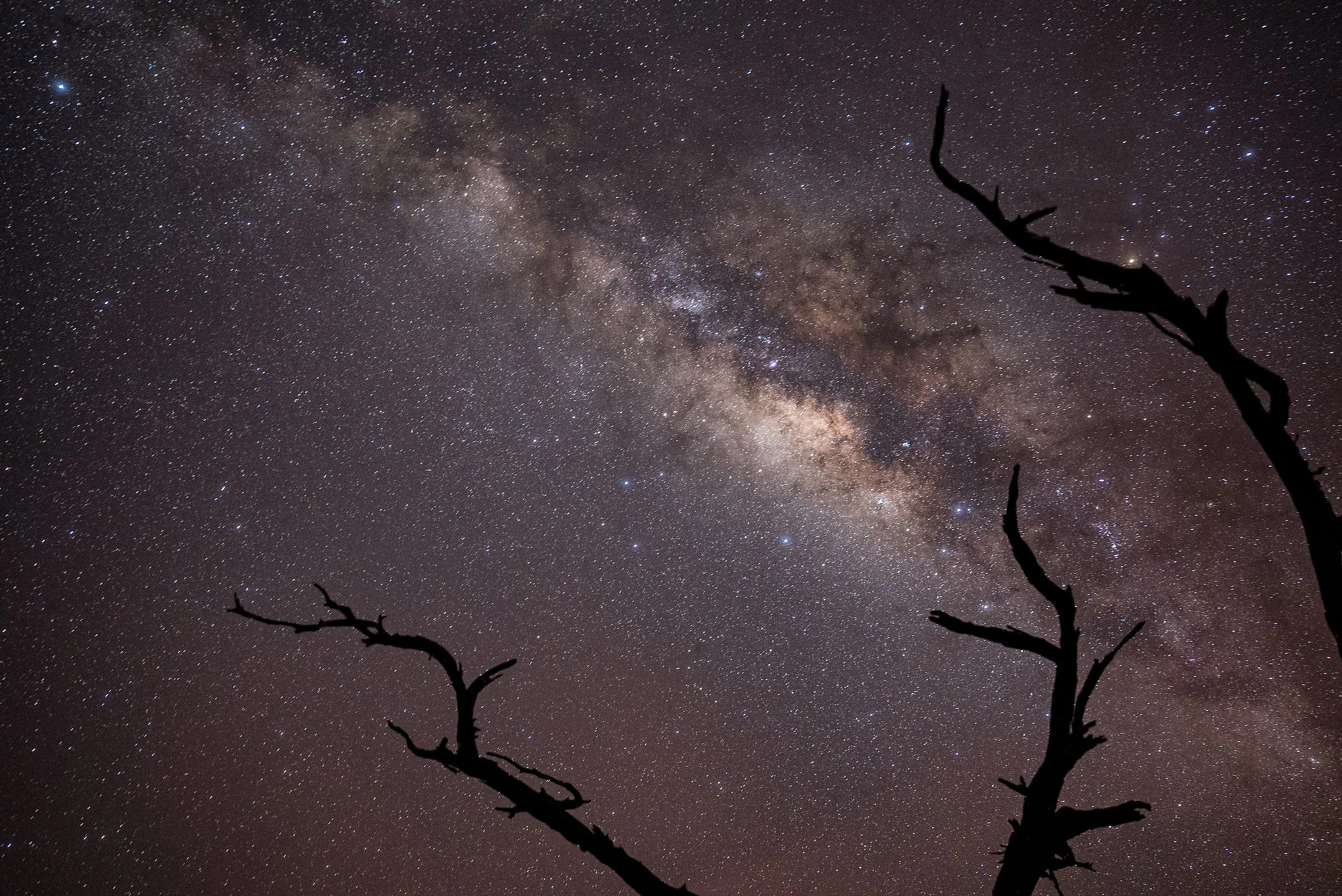
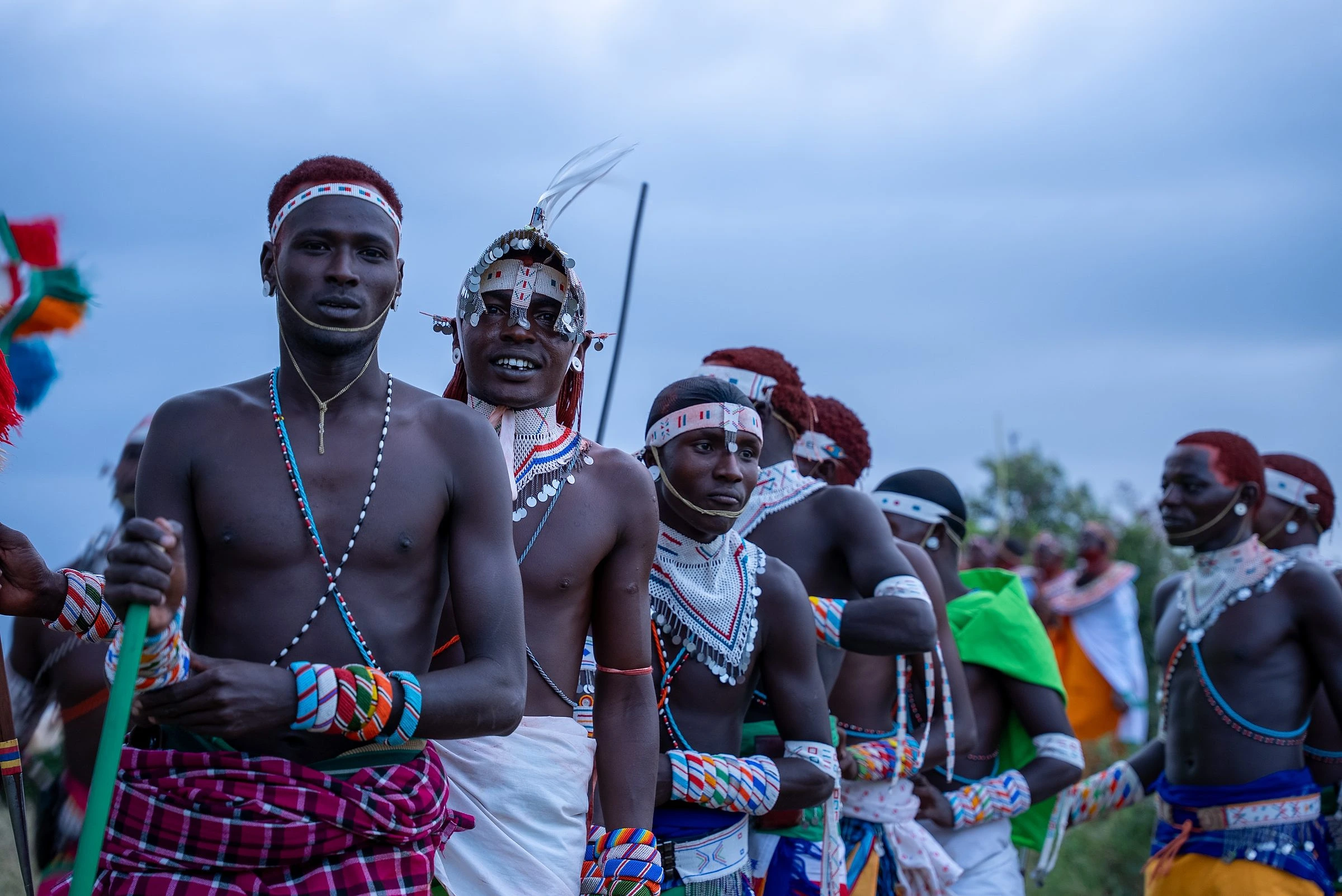
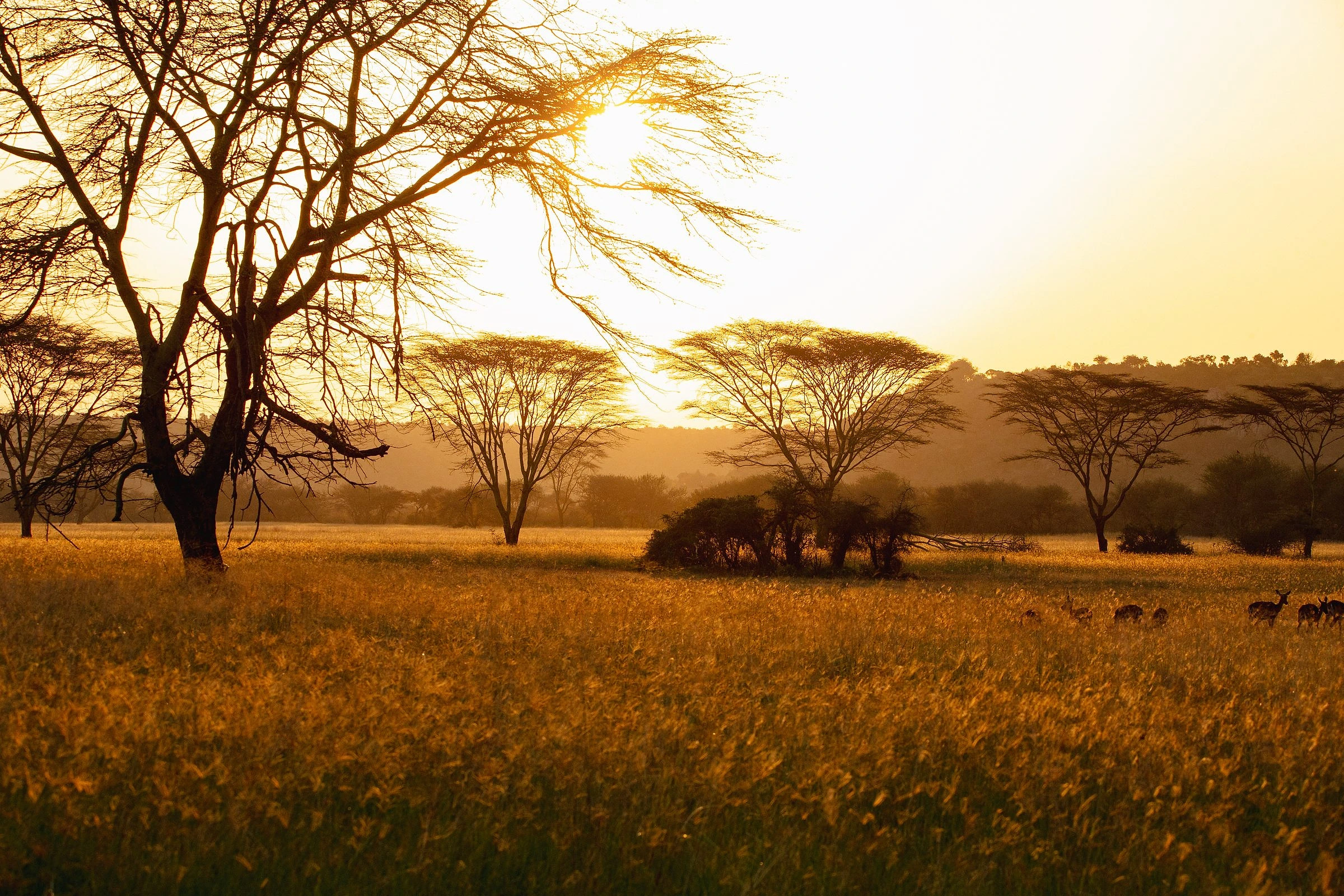
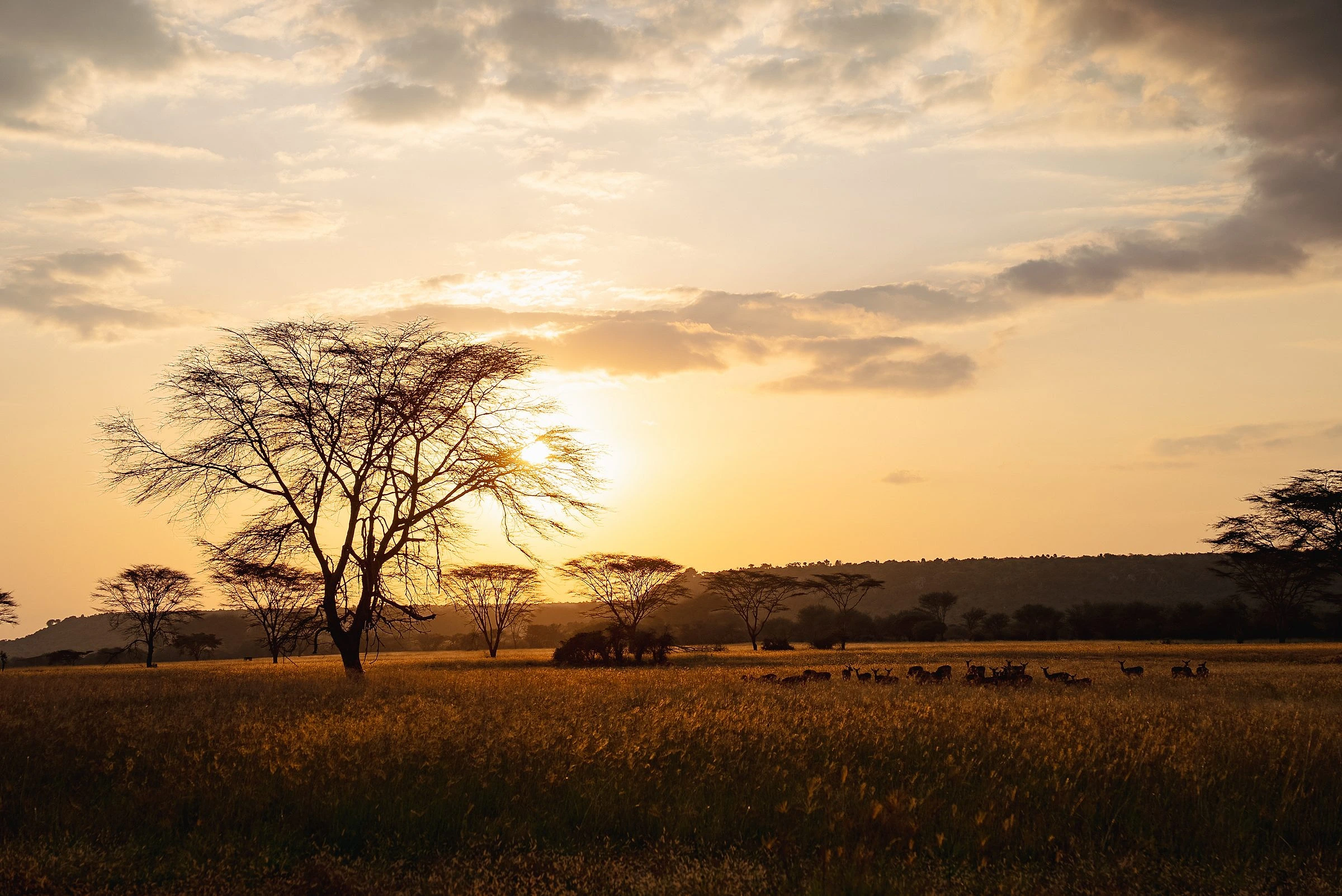
Sundowners on the rocks above the river, with Samburu dancers, and the fire lit as the light goes. Then Max tells you what this land was and what it is becoming, and Liza explains what SOLICE means when they talk about a reset. Dinner is under the stars.
Why this day matters: you arrive somewhere that has been given back its life, and you feel your own pace drop to meet it.
Tuesday 11 May · Plants, predators and cattle
Plants, predators and cattle
First light. We drive out to the kopjes, where the mats are already laid on granite that is just starting to warm. Yoga with Rebekah and breathwork with Chelsea as the sun comes up behind Mount Kenya. Then a slow walk with Anne Powys, who grew up on Suyian and is one of Africa’s foremost ethnobotanists, through the medicinal plants, wild foods and healing traditions of this land. Breakfast is laid in the shade at the end of it, and Fiona Sandeman talks about food, and what keeps a body and a mind well.
Late morning is yours. The spa, a one-to-one with Fiona, the pool, or nothing at all.
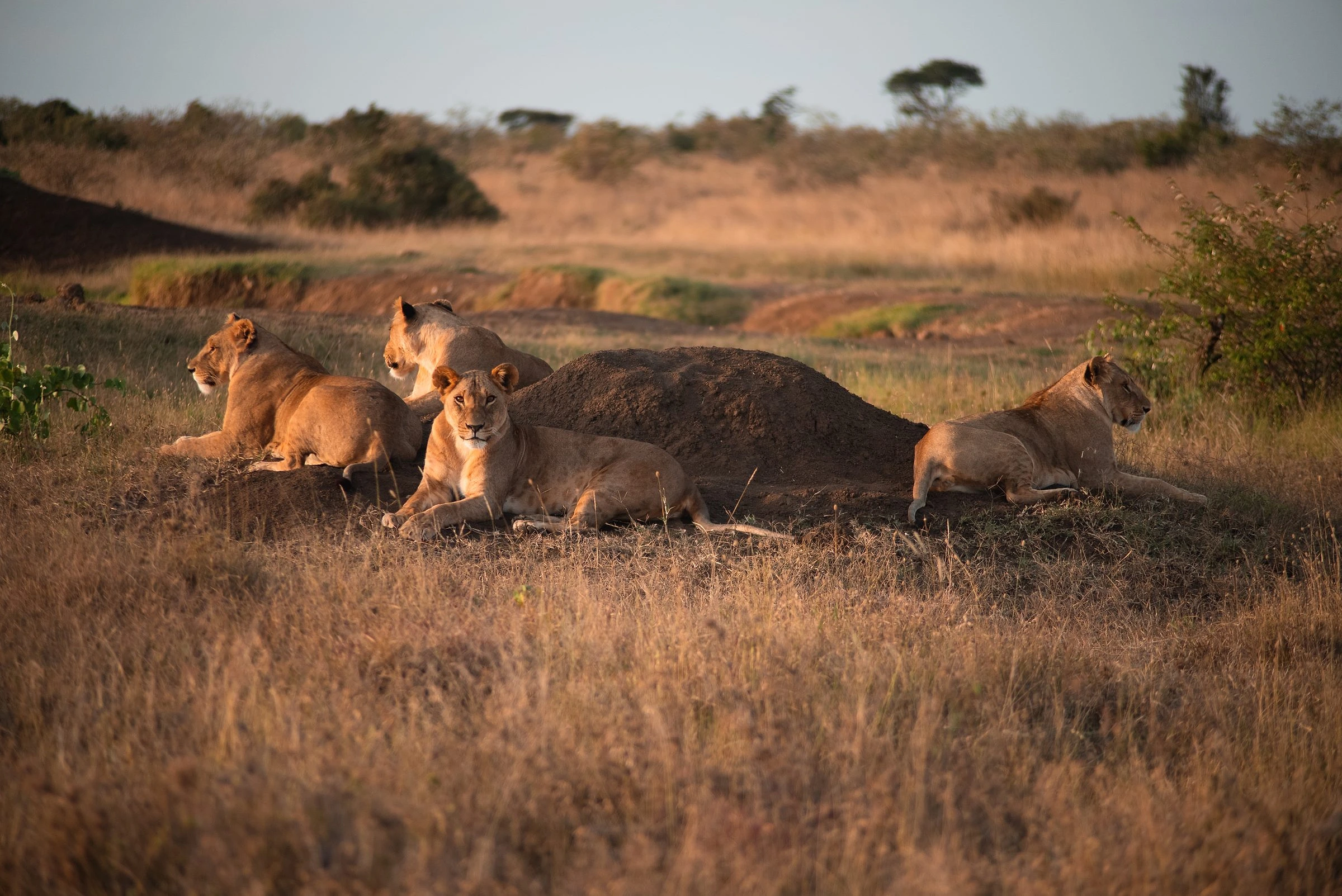
Before lunch. Dr Alayne Cotterill of Lion Landscapes on what it takes for big cats to survive on land where people depend on their livestock. Her answer is practical rather than sentimental: a live lion has to be worth more to a family than a dead one.
Three o’clock. Out with Archie Voorspuy, who runs the conservancy, to the cattle and the herders. The herd moves as one tight group behind a mobile boma, grazing a few hectares hard and then moving on, and the ground is rested for months afterwards. You walk land the cattle left a few days ago and land that has been resting since the rains, and you can see the difference for yourself.
After dark. From the cattle we carry on as the light drops. This is the real attempt at the black leopard: down through the kopjes and along the river, following a week of camera-trap evidence. Sundowners wherever the drive has taken you.
The fire. Katito Sayialel of the Amboseli Elephant Research Project and David Daballen of Save the Elephants join Max to talk about elephant society: families, matriarchs, memory, grief. Between them they know several thousand elephants by name. The Suyian rangers and the Ndorobo, Samburu and Pokot elders who live alongside these animals are at the fire too, and they are the ones to ask the difficult questions.
Why this day matters: the land, the people and the animals, in a single day, from the people who know them best.
Wednesday 12 May · The collaring
The collaring
This is the day the week turns on, and the only one with a fixed early start.
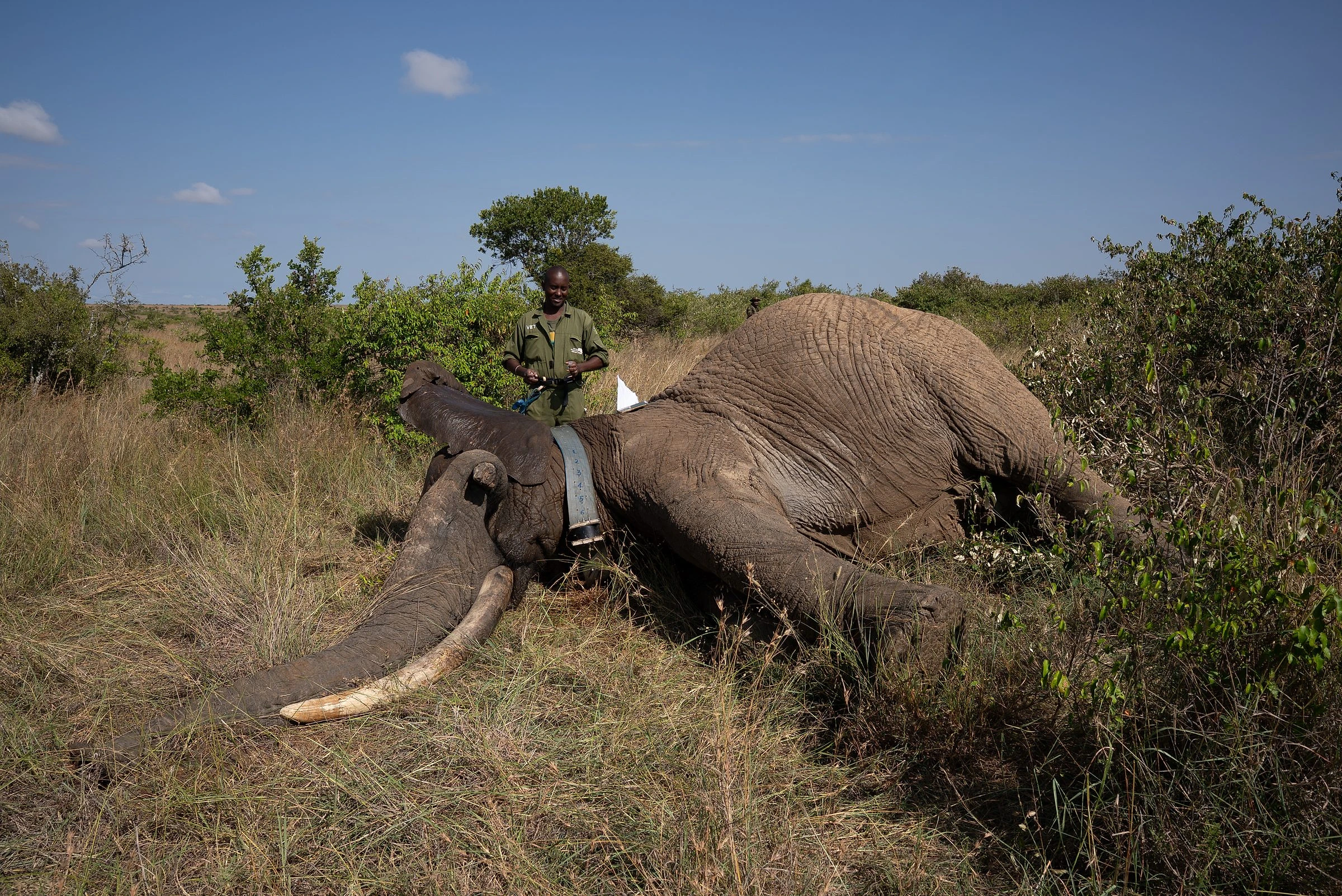
Before first light. We drive down to the southern fence line, where Maurice Schutgens, Space for Giants’ Managing Director of Conservation, Alberto Borges, who runs its partnership with the Kenya Wildlife Service, the KWS vet and the Suyian rangers are waiting. A helicopter works overhead. If conditions allow, two bulls will be collared today. Both break fences, both raid smallholders’ crops, and both are at real risk of being killed for it. The collars are what keep them alive.
You are part of it rather than watching from the vehicle. The vet’s checks. The collar fitted and bolted. Measurements, samples, cool water poured over his ears, then the antidote. Everyone steps well back while six tonnes of elephant gets to his feet and walks off wearing a collar that will report his position every hour for the next two or three years.
Lunch. Back at the lodge, Maurice puts the morning in context. Space for Giants no longer simply funds conservation; it runs protected areas in formal partnership with the governments that own them, in Kenya, Uganda and Gabon.
The afternoon is slow by design. Spa and massage, a sound healing session out on the rocks, and a conversation with Joy on why strength and weight training matter more than almost anything else for how we age.
The evening: Where we come from. Late in the afternoon we drive you to a place we have chosen for this one night. Dinner is under the stars, and Louise Leakey is at the table.
Louise is the third generation of her family to dig in northern Kenya. Her grandparents, Louis and Mary, made the finds that placed the origin of our species in Africa. Her mother, Meave, led the team that found Kenyanthropus platyops at Lake Turkana and forced the human family tree to be redrawn. Her father, Richard, found fossils, then ran the Kenya Wildlife Service and burned Kenya’s ivory stockpile in 1989. Louise now heads the Koobi Fora Research Project on the shores of Lake Turkana.
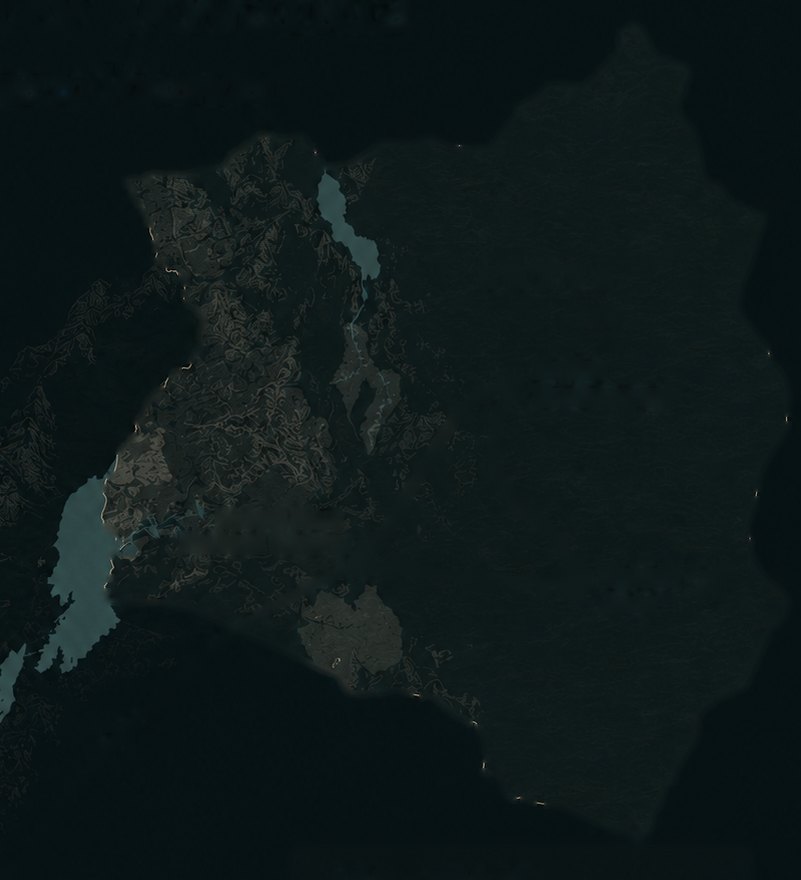
Suyian ConservancyNariokotome · Lake TurkanaGeography indicative
In 1984, on a dry riverbed called the Nariokotome, a few hundred kilometres north of where you will be sitting, Kamoya Kimeu noticed a fragment of skull in the gravel. A hundred and eight bones came out of the ground: most of the skeleton of a boy who died about one and a half million years ago, aged around nine.
He is still the most complete early human skeleton ever found, and he is Kenyan.
In the morning you helped put a collar on a living elephant. In the evening you hear what this landscape looked like a million and a half years ago, from the family who pieced it together.
Why this day matters: there are very few places where you could do both in a day.
Thursday 13 May · Who pays for wild Africa
Who pays for wild Africa
By Thursday you will have walked, driven, collared an elephant and listened hard for four days. So we have left the first half of this day almost empty.
The morning. Pilates with Victoria Kelmanson, out on the conservancy first and then on the reformers at the lodge. The spa is open all day, and the therapists and Fiona are available for one-to-ones.
Before lunch. How a landscape this size is watched. Swabir Abdulrehman, who came to conservation from UK Special Forces communications and now leads the digitisation of protected areas, and Jonathan Baillie, founder of Natural State and formerly of the Zoological Society of London and National Geographic, on EarthRanger, drones, AI and real-time monitoring. Wednesday’s collars are live on the screen, and you watch the two elephants you helped collar moving across the country you have spent the week in.
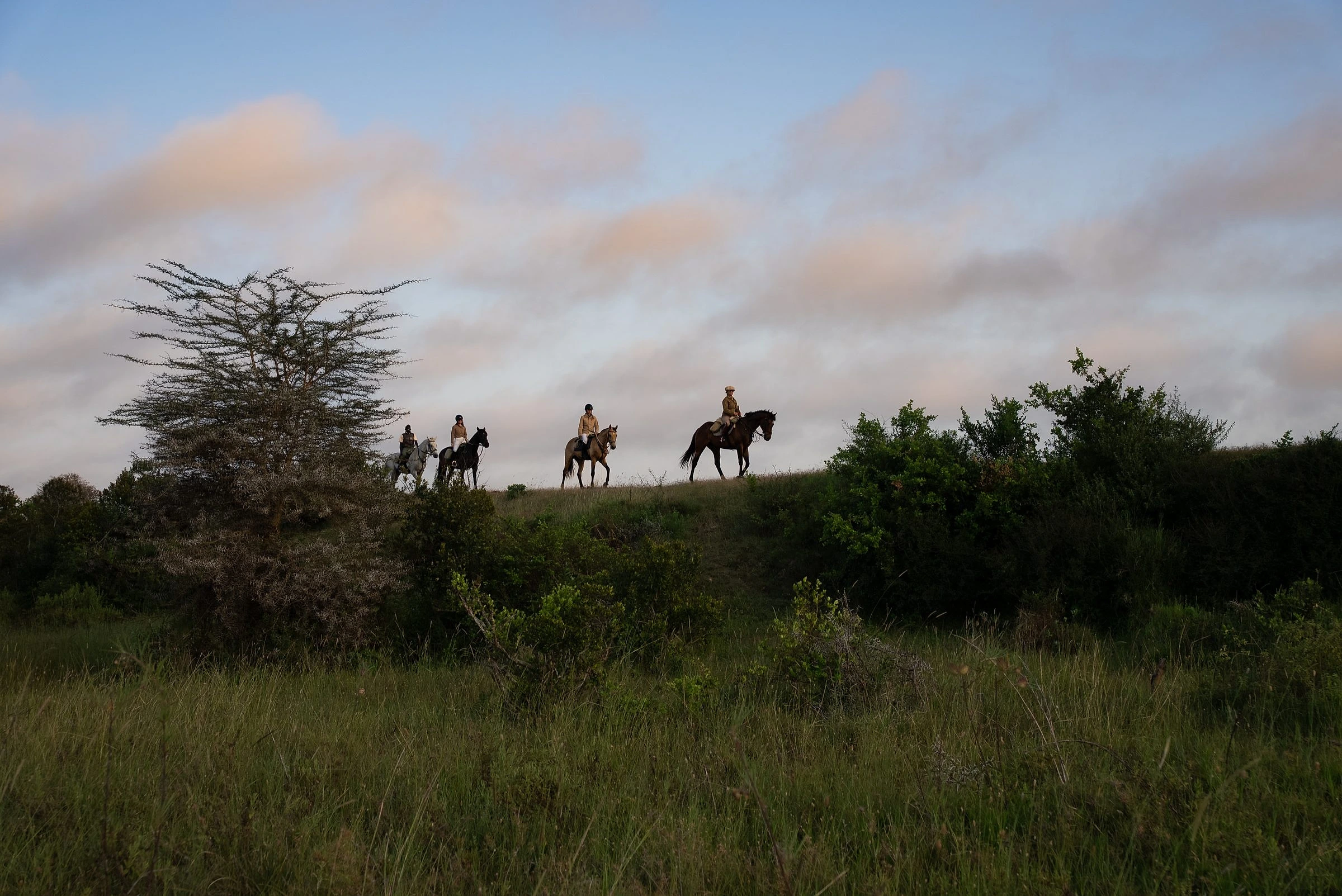
The afternoon. Ride out across the open plains on horseback. Go out again for the black leopard, or for wild dog, one of the rarest animals on the continent. Or do neither and stay by the pool.
The evening. Over sundowners and dinner, how any of this gets paid for, in three parts, with Max in the chair. Tourism, with Stefano Cheli, who pioneered high-end eco-tourism in East Africa, and Liz TBC · surname: what a lodge like this one can realistically carry, and why the one you are sitting in matters to the land around it. Payment for ecosystem services, with Jonathan Baillie. Debt-for-nature swaps and conservation bonds, with Chris Gordon of Conservation Alpha. An hour, no longer, and if everyone agrees we have not been honest enough.
Why this day matters: this is where the Suyian model stops being an idea and becomes arithmetic.
Friday 14 May · The Rift Valley, and the last night
The Rift Valley, and the last night
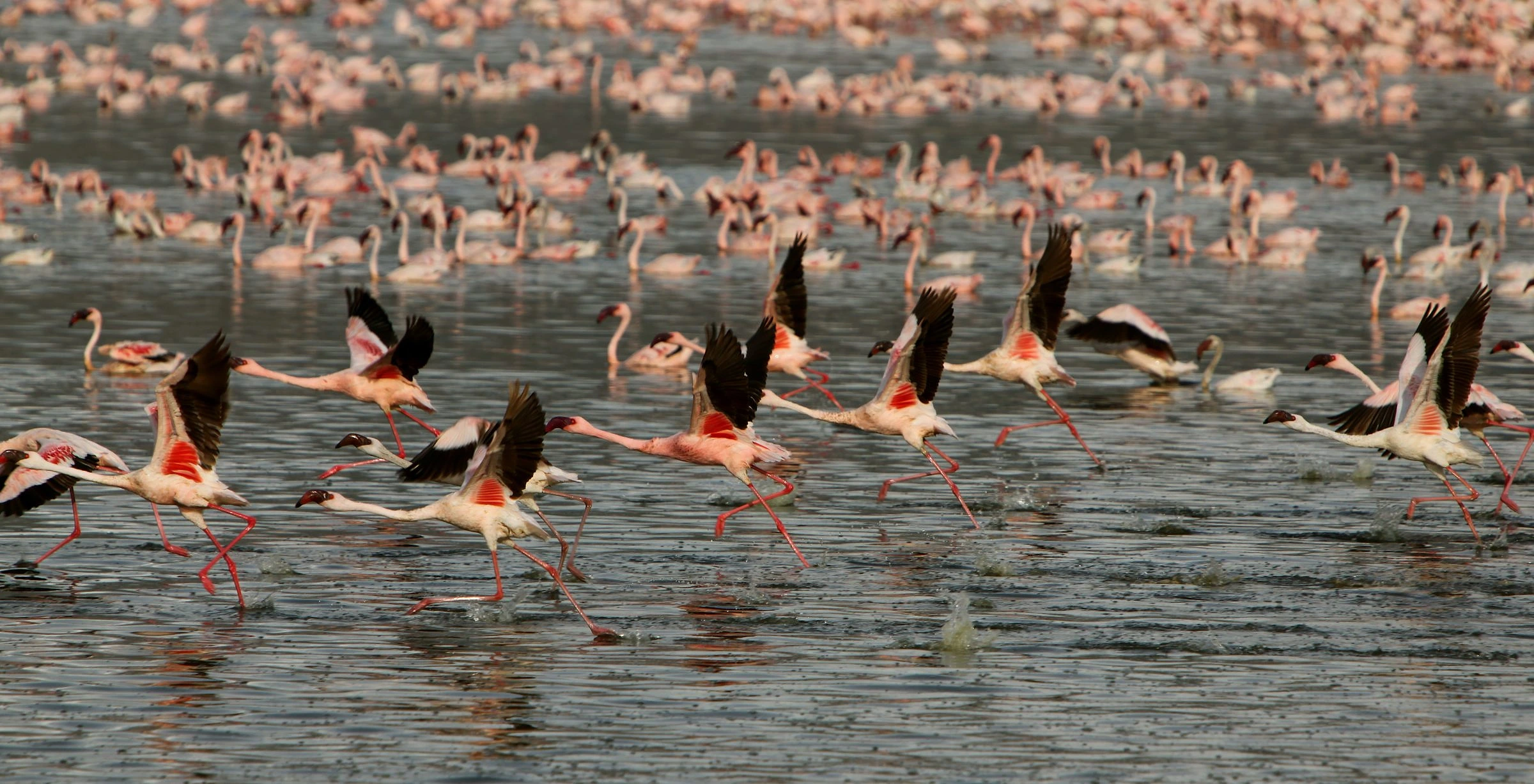
First light. Four helicopters lift off with the whole group aboard, out over the edge of the plateau and down the escarpment into the Great Rift Valley. On the soda lakes below are the flamingos, tens of thousands of them at the least. We land on a remote shore for breakfast, then fly on to Mukutan, where the gorge drops away towards the valley floor, for a picnic with Pokot dancers. Home along the escarpment in the early afternoon, and the rest of the day is yours.
The last night. We drive you to a place we keep to ourselves until you are standing in it. Dinner is under the stars with Professor Judi Wakhungu, Kenya’s former Cabinet Secretary for the Environment and one of the architects of the Paris Agreement; the Hon Francis ole Kaparo, Speaker of Kenya’s National Assembly for fourteen years and founder of the Northern Rangelands Trust; and the Hon Sarah Korere, Member of Parliament for Laikipia North. Between them they have written the law, run the ministry and held the seat, and the conversation is about what it actually takes to move a country on wildlife and climate.
Then a short closing with Liza, Anne Powys and the elders. Ten minutes, and the last quiet moment of the week.
After that the fire goes up and the evening changes. KNVL comes up from Mombasa and plays under the stars, with lights strung through the trees and the music carrying out over forty-four thousand acres with no one to disturb. The Samburu and Pokot dancers come back. There is no running order, and nobody calls a last song.
Why this day matters: we wanted the week to end on joy.
Stand-in · for: the terrace, last morning
Saturday 15 May · Home
Home
A last early drive or a last practice on the rocks, a long breakfast on the terrace, and time to say goodbye properly to the people who have looked after you all week. The charter takes you back to Wilson. We hold day rooms at Hemingways so you can shower and change before your evening flight, and our team sees you through the airport.
Stand-in · for: the Indian Ocean at dawn, or the Mara at dusk
Before and after
Not ready to go home?
Seven days is the Reset. It doesn't have to be the whole trip. Come early and settle into Nairobi, or stay on afterwards: the coast, the Mara, Samburu, or a few more days on Suyian with the place to yourself. Tell us when you write and we will build it around you.
Once your place is confirmed we send you the Suyian Reset app. The whole week lives on your phone: each day's programme, what time things happen and where to be. No printed schedules and nothing to chase. Open it in the morning and see what the day holds.